About us
About WellWishers
WellWishers is a group of individual Australians supporting a programme of hand-dug water wells in Ethiopia.
This programme was begun by Community Aid Abroad in 1986 and continued by Oxfam Australia, the successor of CAA. Oxfam Australia's work in the Horn of Africa was discontinued in 2005. A few individual supporters of the Hand-Dug Wells programme decided that it was too important to let it lapse. Since 2002, they have raised funds to build 1,162 wells, changing the lives of about 360,000 people.
Individual donors provide varying amounts, with all donations being pooled. Donations by Australian taxpayers are tax deductible. There are no pastoral or religious activities related to the WellWishers programme.
WellWishers works with REST (Relief Society of Tigray), an Ethiopian NGO/not-for-profit organisation. REST has been assisting the people of Tigray since 1978 and has been building wells there for over 30 years.
Our name
WellWishers was chosen as the group name after consultation with donors. It was felt the name encapsulated the programme of providing hand-dug water wells.
How old are we?
We were informally established as WellWishers in 2006, with the WellWishers Trust formally set up in 2007.
How do we work?
We seek donations from the general public and forward over 96% of the funds to Ethiopia to REST. They select sites, organise and monitor construction work and provide training for maintenance and bookkeeping. In 2017 we added village water supplies in Oromia, southern Ethiopia, to our program of support.
Our wish
To supply clean water to all rural Tigray.
To maintain a minimum building programme of 50 wells per year.
To enable villages to acquire health and education facilities.
Mission statement
WellWishers’ goal is to maximise its annual fundraising in order to quickly and effectively build as many wells as possible in Ethiopia, to bring clean water to as many men, women and children as possible, thus saving, extending and enhancing their lives.
Ambassadors
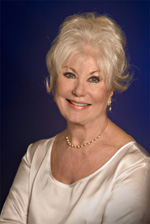
Di Morrissey
Best selling author Di Morrissey is also supporting. Di Morrissey said, “We can all make a difference to someone else’s life. What is so impressive about this project is that it’s all about positives. Every donation makes a difference to the overall goal of saving lives. Over 300 wells have been built in Ethiopia since 2002. Hundreds and hundreds of lives have been saved by these wells, and WellWishers needs the support of the public to continue building these life changing wells.”
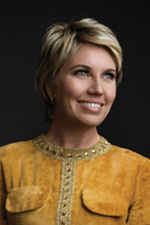
Melinda Schneider
Golden Guitar winning country singer Melinda Schneider says, “I’m urging people to support WellWishers because the fact is that you can change lives through this project. It’s horrific to think that one in five children in Ethiopia will die before the age of 5 essentially because of dirty water. Most rural Ethiopians are living on less than 5 litres of water a day. Anyone can make a difference. I’m asking people to adopt this cause because more has to be done. This project saves lives. It’s a privilege to support it.”
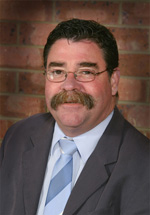
David Boon
“WellWishers is an astounding project. I am proud to get behind this initiative that literally gets in there, builds wells and saves hundreds of lives. Clean drinking water is a vital resource that we all take for granted and it’s shocking to know that some people are dying from their drinking water… something has to be done. The wells built by WellWishers are built in rural and remote villages of the northern Tigray province. A village of up to 500 people benefit from the building of each well. Sometimes more. Anyone can make a difference to this project by just raising funds and taking some action to support the work of WellWishers.”
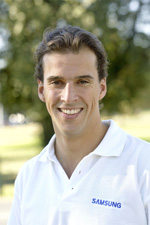
Matt Welsh
Olympic medallist and swimming star Matt Welsh said, “I’m asking people to consider adopting this cause because we can all make a difference to the life of someone else. Women in Ethiopia often get up at 5 in the morning, work until 11 at night and spend an average of about 3 hours collecting water 365 days a year — often from dirty puddles, dams and rivers used by livestock. Polluted water is a significant cause of ill health and malnutrition and one of the reasons so many children die. Building a well changes all that. WellWishers is an astonishing project.”
Trustees
The trustees who are legally responsible for the governance, transparency and accountability issues relating to the Trust are:
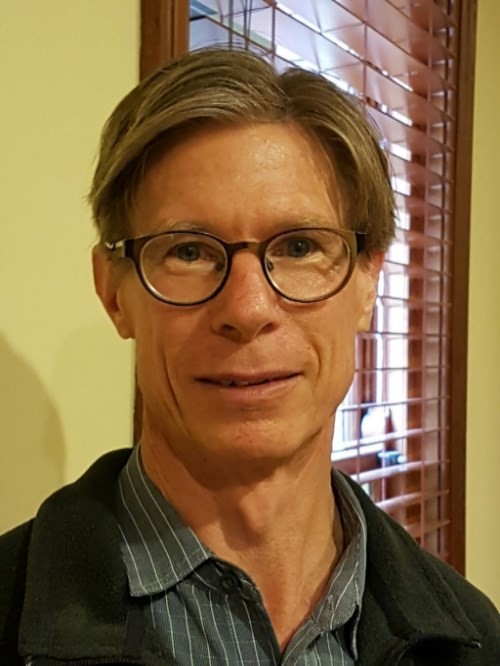
Mark Harwood
Mark has a wonderful wife Jenny, and three grown children. A retired Strategic Land Use Planner, Mark’s career started at the MMBW and finished at Surf Coast Shire. They were introduced to WellWishers through a friend and were impressed with its operation, leading to their family donating a well one year in lieu of Christmas presents. Mark most liked the ownership taken by the villages in constructing, managing and maintaining the wells and was moved to become more directly involved in the ongoing support of WellWishers. Since retiring Jenny and Mark have embraced voluntary and philanthropic activities.
Graham Romanes
Graham from Melbourne recently retired from the role of full-time Honorary Consul-General for Ethiopia, responsible for official Ethiopian matters in Australia and New Zealand. He runs a small business promoting Ethiopian jewellery and artifacts, and Ethiopian Fair Trade coffee. Graham went to Africa to teach in 1971, fell in love with Ethiopia, and eventually returned to Australia to manage the Oxfam/Community Aid Abroad programme in Africa for 15 years. Graham believes that all good programmes should be strongly tied to community capacity and vision, and in Tigray province the wells programme is an absolute stand-out and a proven winner over decades. In July 2014 he took over as Honorary Manager of WellWishers.
Guy Gilbert
Guy is a barrister practising in Melbourne. He specialises in immigration and refugee law. In the 1980s, Guy worked for Community Aid Abroad (now Oxfam Australia), first in Sudan in 1985, in a refugee camp with some 20,000 Tigrayans who were fleeing persecution from the Mengistu regime, and later with emergency programs in the Horn of Africa. As part of this later work he travelled to Tigray to conduct food aid monitoring. He was able to see the early shallow wells program first hand.